From Booking to Payment: How Digital Harvester Management Simplifies Daily Operations
06 Oct 2026 · Team Harvesterwala
How digital harvester management App helps owners, drivers and contractors organize bookings, field records, payments, expenses and daily harvesting operations.
Digital harvester management connects customer records, bookings, field details, payments, expenses, worker information and business reports in one organized system, helping harvester owners and contractors manage daily operations with less dependence on scattered paper records.
A harvesting business can look simple from the outside: a harvester reaches the field, completes the work, and moves to the next job.
But anyone actually involved in the business knows there is much more happening behind the machine.
A customer calls to confirm a booking. Another farmer asks when the harvester will reach his field. Someone needs to check the area and rate. A driver needs the job details. A payment has to be recorded. Fuel and maintenance costs have to be considered. Later, the owner may want to know how much the machine actually earned.
When these details are handled through memory, notebooks, phone calls, and scattered messages, daily operations can become difficult to control. This is where digital harvester management can make a practical difference.
Instead of treating every job as a separate piece of information, a digital system creates a connected record of the harvesting business—from the first customer conversation to the final payment and business report.
What Does Digital Harvester Management Actually Mean?
Digital harvester management is not simply replacing a paper diary with an app.
It means creating a structured way to manage the information that moves through a harvesting business every day.
For a typical harvesting operation, that information may include:
Customer and landowner details
Village and field information
Harvesting area
Job rates
Booking status
Machine availability
Driver or worker assignments
Payment received
Pending amount
Fuel and maintenance costs
Other operating expenses
Business reports
When these details are connected, an owner does not have to remember the entire season in his head.
That is the real purpose of Harvesterwala: making harvesting business information easier to capture, find, update, and understand.
The Real Problem Is Not Booking — It Is What Happens Around the Booking
A booking itself may take only a few minutes. The difficult part starts afterwards. Consider a simple situation.
A farmer books a harvester for 12 acres. The owner records the farmer's number somewhere, remembers the location, tells the driver, and writes the rate in a notebook.
Two days later, the farmer calls again.
“Bhai, harvester kab aayega?”
Now the owner has to find the notebook, remember which field was discussed, check whether another booking is already scheduled, and then call the driver.
Nothing about this is complicated individually. But when 10, 20, or more such jobs are active, small gaps in information start consuming time.
A good harvester management solution focuses on these small gaps—not just on the booking itself.
A Better Way to Look at a Harvesting Business
Instead of asking:
“How do I record my bookings?”
A better question is:
“How do I know what is happening with my harvesting business today?”
That includes four practical questions:
1. What work is coming up?
Upcoming bookings should be easy to identify so the owner can plan machines, drivers, and field visits.
2. What work has already been completed?
Completed jobs should not remain mixed with upcoming work.
3. What money has come in?
Payments should be connected with the relevant customer and booking.
4. What did the business spend?
Fuel, maintenance, wages, parts, travel, and other costs affect the final result.
Turning a Phone Into a Daily Business Record
For many harvester owners, the smartphone is already part of everyday work.
Customers call on it. Drivers call on it. WhatsApp messages arrive on it. Photos, locations, and other work-related information may already be exchanged through it.
The next step is to use that same device for structured business records.
A harvesting business app can provide one place where the owner can move from one task to another without maintaining several separate records.
With HarvesterWala, for example, customer information, bookings, payment records, expenses, workers, and reports are part of the same management system.
This makes the phone more than a communication device—it becomes a practical business management tool.
Before the Machine Reaches the Field: Get the Job Clear
One of the most useful parts of organized management happens before harvesting begins.
A booking should answer basic questions:
Who is the customer?
Where is the field?
How much area needs to be harvested?
What is the agreed rate?
What is the status of the job?
When these details are properly recorded, the owner and driver have a clearer reference for the work.
HarvesterWala's booking workflow allows users to add customer details and record plot, area, rate, and harvesting information. It also supports upcoming and completed booking records.
That means the booking becomes more than a name and phone number. It becomes a usable work record.
Village-Wise and Field-Wise Information Can Make Planning Easier
Harvesting work is often spread across different villages and fields. That creates a practical planning challenge.
Two bookings may look similar in a notebook but require completely different travel and scheduling decisions because they are in different locations.
Digital records can help organize this information so the owner can understand where the next jobs are located.
HarvesterWala specifically supports village-wise and field-wise harvester booking management.
This can be particularly useful for contractors and owners handling multiple bookings during a busy season.
The goal is not complicated technology.
The goal is simply to answer:
“Where does my machine need to work next?”
without searching through several pages.
The Payment Story Does Not End When the Job Is Finished
A harvesting job may be completed today, but the payment may come later.
This is one of the areas where memory-based record keeping can become risky.
Suppose a machine completes five jobs:
One customer pays the full amount.
One pays an advance.
One pays half.
Two payments are still pending.
At the end of the week, the owner may remember that money is pending—but not immediately remember exactly how much and from whom.
A digital record can make this information much clearer.
HarvesterWala connects payment information with bookings and records received and pending amounts.
Expenses Tell the Other Half of the Story
Looking only at money received can create a misleading picture of business performance.
A machine may generate good revenue while operating costs are also high. Fuel is one example.
Then there are:
Maintenance
Spare parts
Worker wages
Travel
Repairs
Other operational costs
HarvesterWala allows these types of expenses to be recorded as part of the harvesting business records.
Once income and expenses are viewed together, the owner gets a more realistic picture of the business.
This is why a good App for Harvester Management should not stop at bookings.
It should help answer the bigger question:
“After doing all this work, what did the business actually achieve?”
Drivers and Workers Are Part of the Operation Too
A harvesting business is rarely just one machine and one person.
There may be drivers, helpers, workers, contractors, and different responsibilities involved in completing jobs.
When their information is maintained separately, coordination becomes harder.
A digital management system can provide a structured record for:
Driver details
Staff information
Work assignments
Responsibilities
Work records
HarvesterWala includes worker and staff management features designed around these operational requirements.
This is especially relevant for contractors or owners managing more than one harvester.
What Changes When Daily Operations Become Organized?
The biggest change may not be one particular feature.
It is the reduction of small uncertainties.
Instead of wondering:
“Which customer was this?”
You have the customer record.
Instead of wondering:
“Was this payment received?”
You have the payment record.
Instead of asking:
“Where did this expense come from?”
You have the expense entry.
Instead of calculating everything at the end of the season:
“How much did I actually make?”
You can review organized business reports.
That is the practical value of a Harvester Management Software.
HarvesterWala: Built Around the Way Harvesting Work Happens
HarvesterWala is designed specifically for harvester owners, drivers, contractors, and agricultural service providers.
Its workflow follows the actual sequence of a harvesting operation:
Customer → Booking → Completed Job → Payment → Expenses → Reports
The platform includes harvester management, customer management, booking management, payment tracking, expense management, worker and staff management, billing, and reporting.
The HarvesterWala App is therefore not limited to one part of the business.
It is designed to keep the information generated throughout the harvesting process connected.
For an owner, that can mean less dependence on scattered notes.
For a driver, it can mean clearer work records.
For a contractor, it can mean a more organized way to manage machines, customers, and workers.
The problem begins when important information is spread across:
Multiple notebooks
Loose papers
Phone contacts
WhatsApp chats
Memory
Separate expense notes
The more places information lives, the harder it becomes to get one clear picture.
Digital management brings those records into a more structured system. That is the real improvement.
How to Start Using a Digital Harvester Management System
Moving to digital management does not need to happen all at once. A practical approach is to start with the information that causes the most confusion.
Step 1: Build customer records
Start by organizing customer and landowner details.
Step 2: Record every booking
Add field, area, rate, and other relevant job information.
Step 3: Update payment status
Record payments when they are received instead of waiting until later.
Step 4: Enter expenses regularly
Do not wait until the end of the month to reconstruct fuel or maintenance expenses from memory.
Step 5: Review reports
Use the accumulated information to understand income, costs, pending payments, and business performance.
This habit makes digital management part of the daily workflow rather than an extra task.
Frequently Asked Questions
What is the main purpose of harvester management software?
The main purpose is to organize the information involved in running a harvesting business, including customers, bookings, payments, expenses, workers, and reports.
Can a harvester management app help with daily planning?
Yes. Organized booking and work records can make it easier to understand upcoming and completed jobs and plan machine and worker assignments.
Is HarvesterWala useful for contractors?
Yes. HarvesterWala is designed for harvester owners, contractors, drivers, and agricultural service providers. Its features include booking, customer, worker, payment, expense, and reporting management.
Can I manage pending customer payments?
Yes. HarvesterWala records received and pending amounts against bookings, helping users identify outstanding payments.
Can I record fuel and maintenance costs?
Yes. The platform supports recording fuel, maintenance, spare parts, travel, wages, and other operational expenses.
Do I need advanced technical knowledge?
No. HarvesterWala states that the app is designed for everyday field use and does not require special technical knowledge.
Can digital records help me understand profit?
Yes. When income and expenses are consistently recorded, reports can provide a clearer view of business performance. HarvesterWala provides reports for income, expenses, and net profit.
Final Takeaway
A harvesting business creates new information every day.
A new booking comes in.
A machine moves to another field.
A driver completes a job.
A customer makes a payment.
Fuel is purchased.
Maintenance is required.
If every piece of information stays separate, managing the business becomes harder as the season gets busier.
Digital management brings those moving parts into one organized workflow.
That is the real idea behind HarvesterWala: not simply keeping records digitally, but making everyday harvesting operations easier to follow, manage, and review.
From the first booking to the final payment, a well-organized digital record can help turn a busy harvesting operation into a more manageable business.
HarvesterWala — manage the work, understand the numbers, and keep your harvesting business organized.
More from the blog
23 Sep 2026
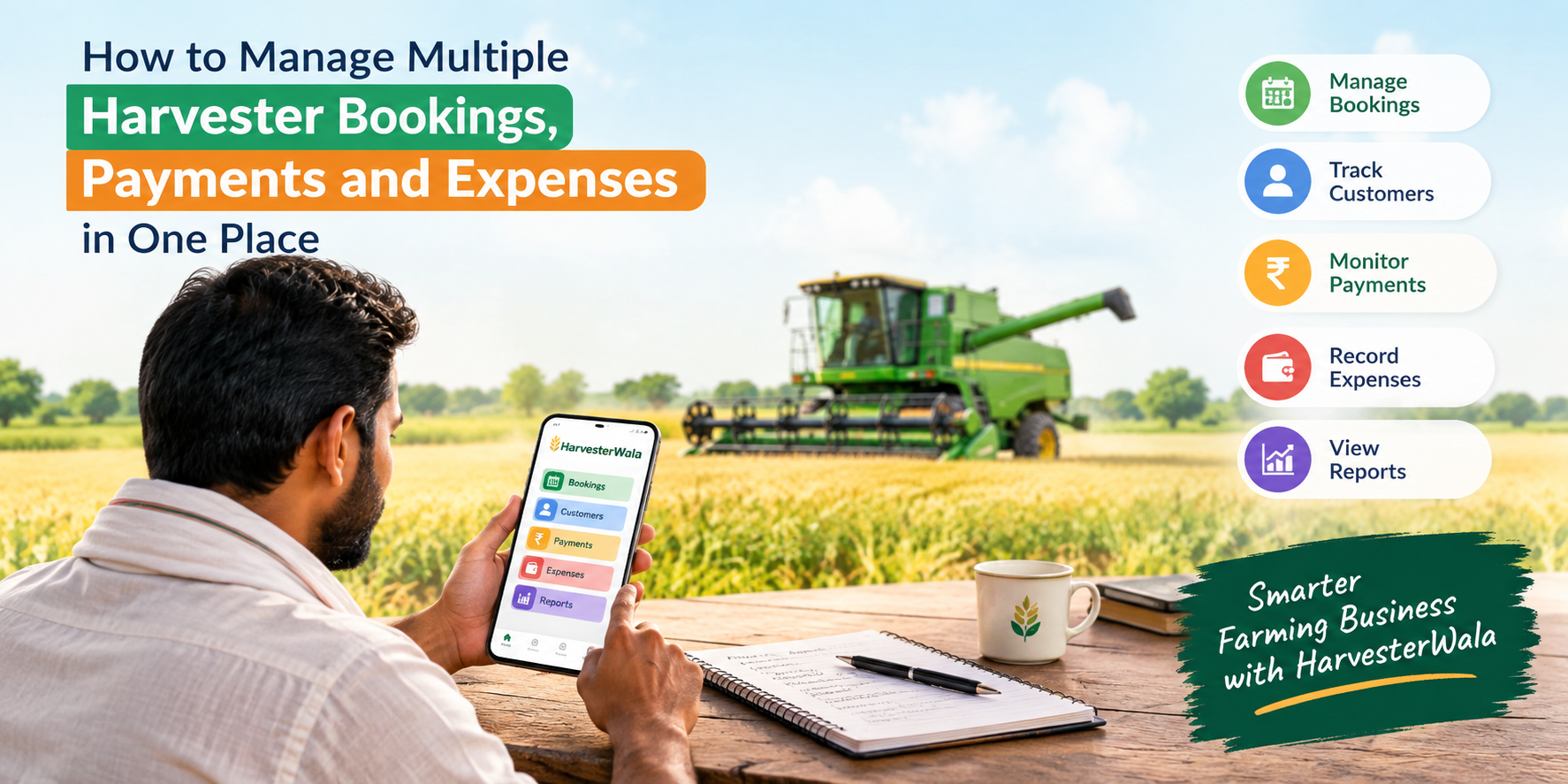
How to Manage Multiple Harvester Bookings, Payments and Expenses in One Place
Learn how to manage multiple harvester bookings, customer payments, pending dues and expenses in one place with a simple harvester management app
16 Sep 2026
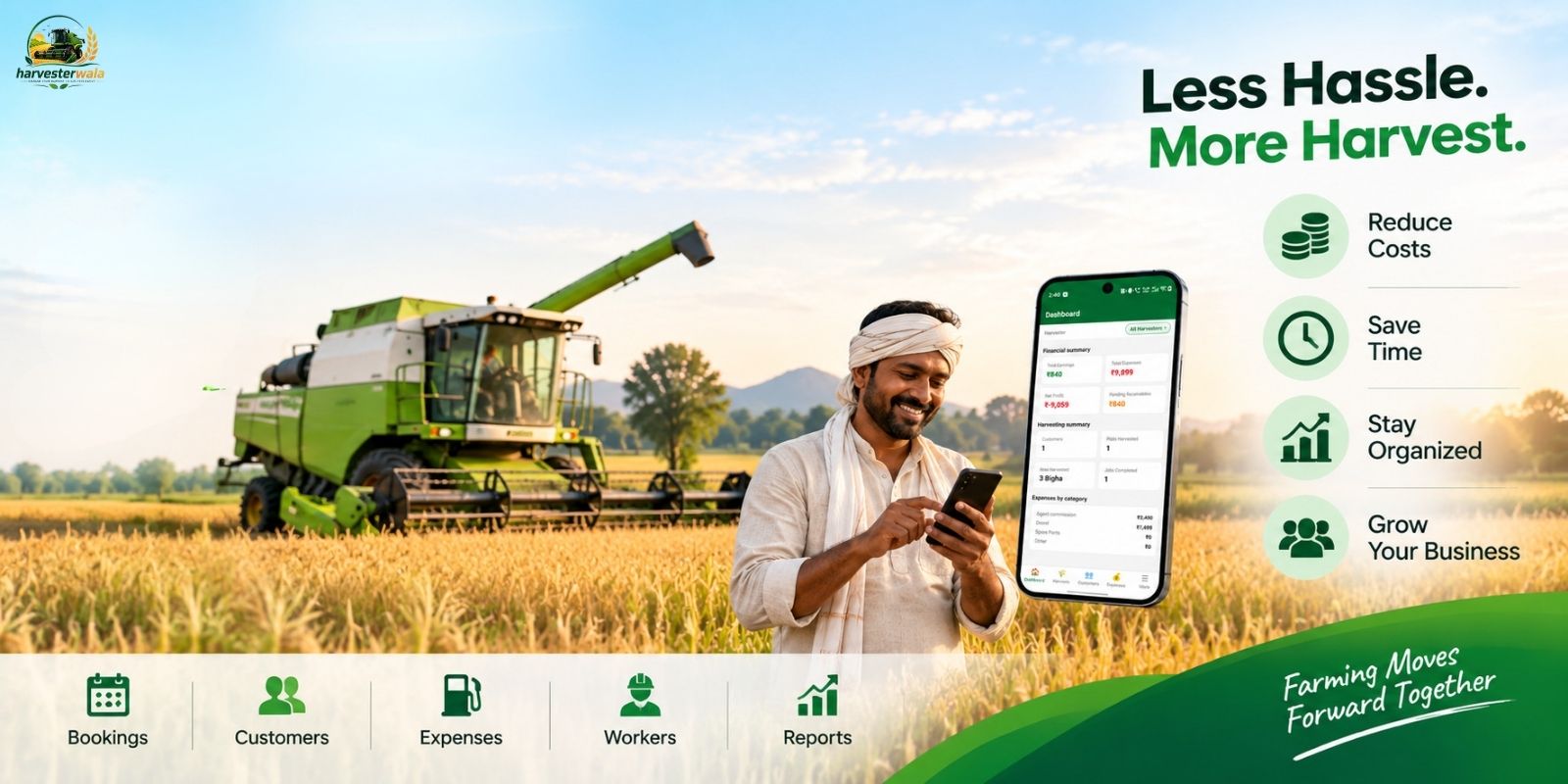
How Harvester Owners Can Reduce Costs and Save Time with Harvester Management Software
Learn how Harvester Management Software can help owners save time, track bookings, payments, expenses, workers and reports while keeping harvesting business records organized.
07 Aug 2026
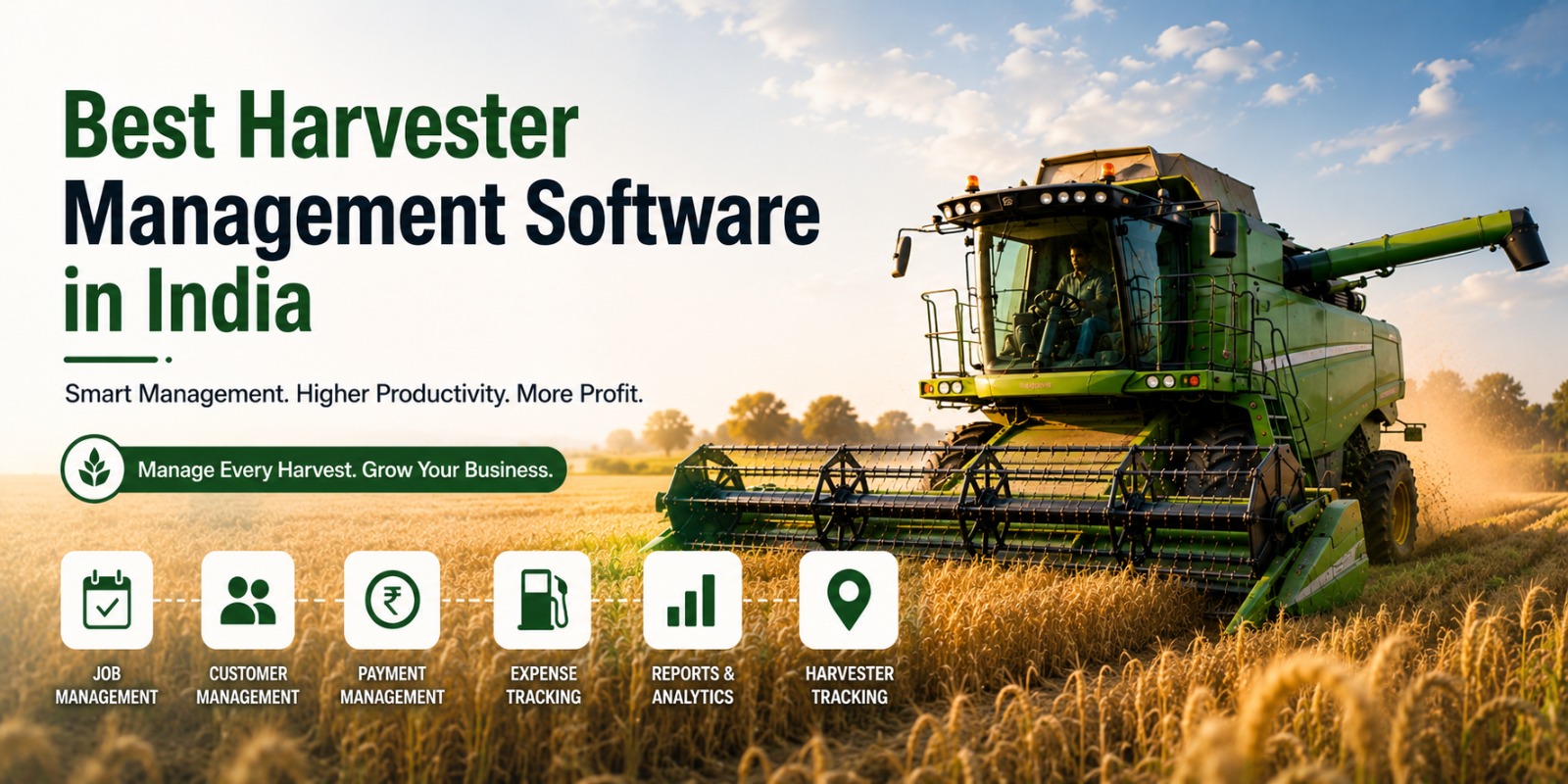
Best Harvester Management Software in India: Features, Benefits, and Complete Buying Guide
Choosing the right Harvester Management Software can improve productivity, simplify business management, and support long-term growth. This complete guide helps you make the right decision.